How To Get Your Kitchen Benchtop Height Right
Key Takeaway: The standard kitchen benchtop height is 900mm, but the right height depends on how you actually use the kitchen. Taller clients may be more comfortable with a higher bench, especially around the sink where the bowl sits lower than the benchtop. The best way to get it right is to physically test different heights in the showroom before locking anything in.
–
The standard benchtop height is 900mm.
That is usually where we start when we are designing a kitchen, but it is not necessarily where every kitchen has to finish. If the client is specifically tall, we can go higher. If they want it lower, we can definitely go lower.
We have had taller clients who have wanted benchtops up to a metre high, but it just comes down to whatever feels comfortable for them.
Most people do get used to whatever benchtop height they have, but if you are quite tall and you are using a benchtop that is too low for you, it can make a difference. Especially if you have some kind of back injury or a sore back. You can actually find that while you are working in the kitchen, your back will get sore because you are bending down.
So in that case, we would definitely raise the benchtop up for them.
It’s Not Just About The Benchtop
One thing people often overlook is the sink.
If you have an undermount sink, the bowl of the sink is obviously sitting below the benchtop. So if you have a 900mm benchtop and a sink bowl that is 200mm deep, then the base of the sink is sitting at around 700mm high.
That can feel quite low when you are standing there using it.
So if somebody is thinking about lowering their benchtop, or they are already quite tall, we would have them stand at the sink and actually look at where the bottom of that bowl would be. Then we can see if that feels too low for them, and whether we need to raise it up or adjust it to suit.
The benchtop might feel fine when you are chopping vegetables, but the sink may not feel right once you factor in the depth of the bowl.
How We Test Different Heights In The Showroom
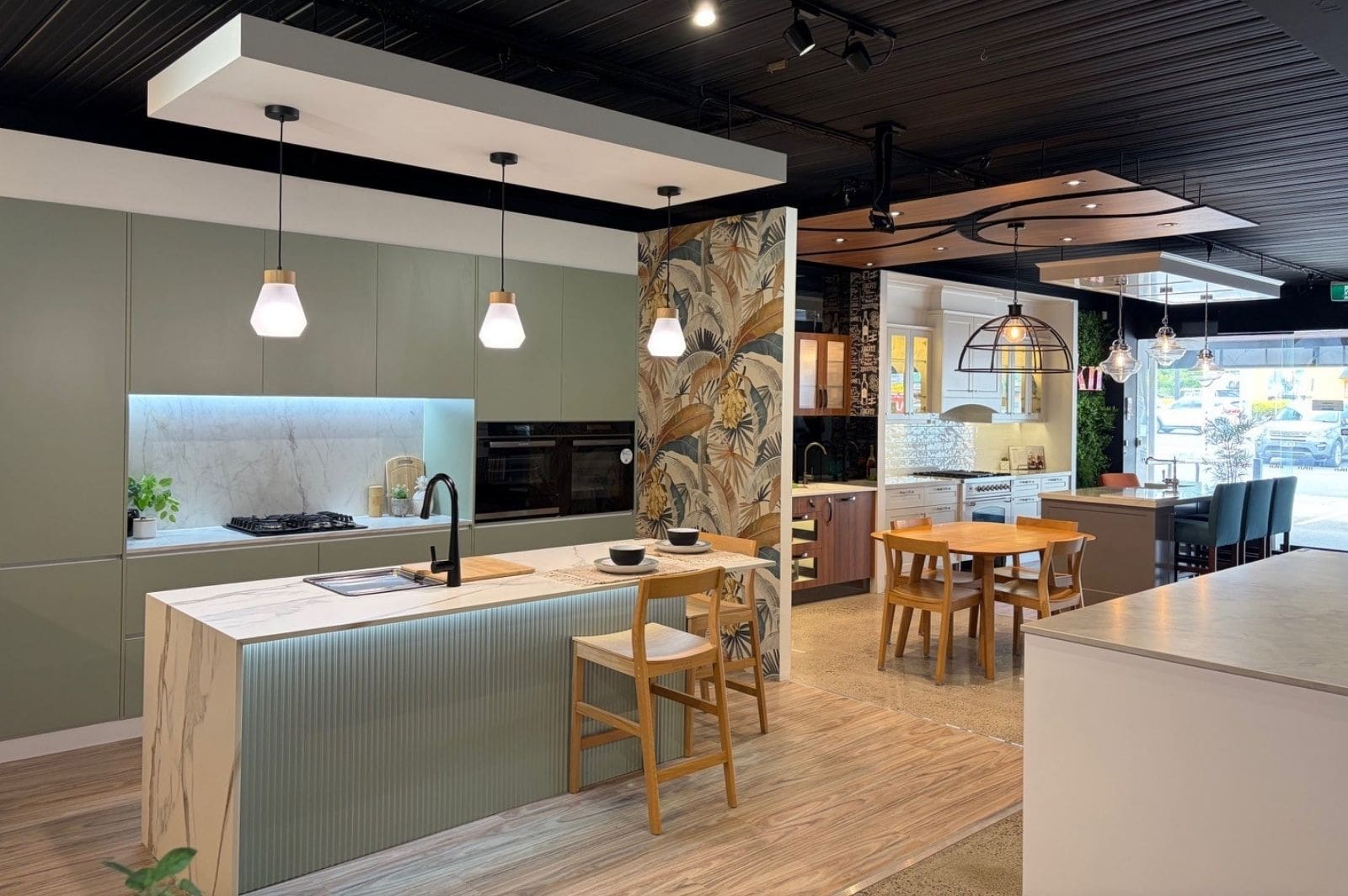
In the kitchen showroom, we have a few different benchtop heights already there.
We have one that is slightly lower than standard, at about 850mm. We have one that is higher than standard, at about a metre. The rest are at the standard 900mm height.
If somebody wanted to try 950mm, for example, we would get a 50mm benchtop sample and put it on top of the 900mm bench. Then we get them to stand there, put their hands on it, and feel if that is the right height for them.
We can do the same thing with stone samples. We might put a 20mm stone sample on top of the 900mm bench and say, “Okay, that’s 920mm. Have a feel of where that sits and imagine working at that height.”
Then we can add another sample and keep testing until they get a sense of what feels right.
It is one thing to talk about numbers, but it is much easier when someone can physically stand there and feel the difference.
When Going Higher Makes Sense
If somebody is quite tall, a higher benchtop can make the kitchen a lot more comfortable to use.
You are standing there chopping vegetables, making a cup of coffee, preparing dinner. If the benchtop is too low, you are rounding your back to reach it. Over time, that can become uncomfortable, especially if you already have back issues.
So raising the benchtop can be a really practical solution.
But I do normally say to people, if you are going higher than 950mm, really have a think about it.
Anywhere in that sort of 880mm to 950mm range, most people do not even really notice that it is not a normal height. Once it goes higher than 950mm, most people will stand there, put their hands on the benchtop, and feel that it is higher than normal.
That might be perfect for you, but if you are thinking about saleability later, it can affect the next person who goes to buy the house. If they are quite short and the benchtop is higher than 950mm, that could be a deterrent.
What About Islands, Breakfast Bars And Seating?
With islands and breakfast bars, we do not usually approach the height too differently.
Most people will adjust the stool if they have an overly high benchtop, and a lot of stools are height adjustable now. So as far as the seating goes, it is not usually a huge issue.
A standard bar stool is usually between 70 and 80 centimetres high, and the standard benchtop is 900mm, so you would obviously adjust the stool to suit.
Some kitchens also have a raised bar back, where the back panel of the benchtop goes up higher and then you put a bit of benchtop on top. That can be good in a kitchen behind a sink because it helps contain any splashback you get from the sink.
It is sort of an older style now. Most people take those raised bar backs out to open up the space and allow more light to come in. But some people do still like that raised bar back around the sink area because it can help contain and hide the mess a bit.
If You Don’t Want To Change The Whole Benchtop Height
If somebody is thinking about saleability and they do not want to make the whole kitchen benchtop higher, there are other options.
You can get a larger movable piece of stone or timber that sits on top of your benchtop in your cutting area. Not really chopping board size, but a larger piece that gives you a slightly raised working surface when you need it.
That can work, but it comes with its own set of issues.
Because it is sitting on top of the benchtop, you want to make sure it has little stopper feet on it so it is not scratching the existing surface. You also need to think about cleaning. It has to be small enough that you can move it out of the way to wipe down the benchtop properly.
Once you go to a certain size in stone, it can become too heavy to move day to day. So you would need to think about whether it should be made out of wood instead, or what thickness would actually be practical.
There are definitely options there, but it still needs to be usable.
The Best Way To Get It Right
The best thing you can do is test it.
Stand at different heights. Put your hands on the benchtop. Imagine chopping vegetables there. Imagine making coffee there. Stand at the sink and think about where the bottom of the bowl will actually sit.
A number on paper only tells you so much.
Once you physically feel the height, it is much easier to know whether standard is right for you, or whether it needs to be raised or lowered slightly to suit the way you actually use your kitchen.
Visit The MKN Showroom
Visit the Modern Kitchens Northside showroom to test different benchtop heights in person and talk through what will feel most comfortable for the way you use your kitchen every day.